
How Often Should You Clean Air Ducts? A Homeowner’s Guide
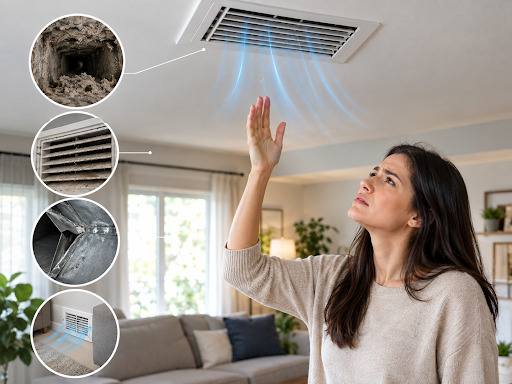
Air ducts help circulate heated and cooled air throughout your home, but dust, debris, pet dander, and other particles can accumulate inside an HVAC system over time. That raises an important question for homeowners: how often should you clean your air ducts?
There is no single cleaning schedule that applies to every home. Instead, professional air duct cleaning should be considered based on the condition of the ductwork and factors such as visible debris, recent remodeling, pets, unusual odors, moisture concerns, or a lack of professional HVAC inspection.
For homeowners in Washington, DC, Maryland, and Northern Virginia, understanding these signs can help determine when professional duct cleaning may actually be appropriate.

How Often Should Air Ducts Be Cleaned?
There is no universal timeline that applies to every home. Instead of scheduling air duct cleaning simply because a certain number of years have passed, homeowners should consider the condition of their ductwork and HVAC system.
Homes with pets, recent renovations, significant dust buildup, or moisture concerns may require closer attention. If it has been several years since your HVAC system was professionally inspected, an evaluation can help determine whether cleaning is appropriate.
7 Signs Your Air Ducts May Need Cleaning
1. You Recently Remodeled Your Home
Have the accessible HVAC components and ductwork evaluated after major remodeling to determine whether accumulated debris requires professional cleaning.
2. Dust Quickly Returns After Cleaning
If you notice excessive dust around vents or throughout your home shortly after cleaning, your HVAC system may need to be inspected. A professional can determine whether accumulated debris inside the ductwork is contributing to the problem.
3. You See Dust or Debris Inside the Ductwork
Visible dust or debris in accessible portions of your duct system can be a reason to schedule a professional evaluation. Cleaning may be recommended when buildup is significant.
4. You Have Pets
Pet hair and dander can circulate through your home's HVAC system. Homes with multiple pets may need more frequent attention depending on the amount of buildup and overall indoor air quality.
5. You Notice Unusual Odors
Persistent or unusual smells when your heating or cooling system operates should not be ignored. An inspection can help identify whether the odor is coming from the ductwork, HVAC equipment, moisture, or another source.
6. You Have Moisture or Mold Concerns
Moisture problems require special attention because simply cleaning the ductwork may not address the underlying issue. Identifying and correcting the source of moisture is an important part of addressing the problem.
7. Your HVAC System Hasn't Been Inspected in Several Years
If you cannot remember the last time your HVAC system or ductwork was professionally evaluated, it may be worth scheduling an inspection. A professional assessment can help determine whether cleaning is actually necessary.
Can Air Duct Cleaning Improve Indoor Air Quality?
Air duct cleaning and indoor air quality testing serve different purposes.
Professional duct cleaning can remove accumulated dust and debris from portions of the HVAC system. Indoor air quality testing, on the other hand, can provide information about what may be circulating in the air inside your home.
For homeowners concerned about allergies, mold, dust, or other indoor air quality issues, testing can provide additional information before deciding what steps to take. Depending on the testing performed, laboratory analysis may identify airborne particles, mold spore levels, and other environmental factors.
When Should You Call a Professional?
If you notice visible debris, persistent odors, excessive dust, signs of moisture, or other concerns with your HVAC system, a professional evaluation can help determine whether residential air duct cleaning or another service is appropriate.
Rather than assuming that every home needs routine duct cleaning, look at the specific condition of your system. A qualified professional can inspect the accessible components, discuss your concerns, and explain whether cleaning, testing, or another HVAC service is appropriate.
For homeowners and businesses in Washington, DC, Maryland, and Northern Virginia, RC Duct Cleaning provides professional air duct cleaning and indoor air quality testing services.
Final Thoughts
There is no one-size-fits-all answer to how often air ducts should be cleaned. The right timing depends on your home's condition, HVAC system, lifestyle, and specific concerns.
If you have recently remodeled, own pets, notice unusual odors, see excessive dust, or have concerns about moisture or indoor air quality, a professional inspection can help you make an informed decision.
RC Duct Cleaning in FOX 5 DC
For homeowners looking for more information about air duct cleaning, FOX 5 DC recently featured RC Duct Cleaning in an article addressing common questions about professional duct cleaning.
FAQs
1. How often should air ducts be professionally cleaned?
There is no fixed schedule for every home. Cleaning should be considered based on the condition of the ductwork and factors such as dust, pets, remodeling, and moisture concerns.
2. Is air duct cleaning necessary if I don't see visible dust?
Not necessarily. If there are no specific concerns, a professional evaluation can help determine whether cleaning is appropriate.
3. Can pets affect air duct cleanliness?
Yes. Pet hair and dander can circulate through an HVAC system and may contribute to dust and indoor air quality concerns.
4. Can air duct cleaning improve indoor air quality?
Cleaning can remove accumulated dust and debris from the HVAC system. If you have broader indoor air quality concerns, testing can provide additional information about airborne particles and other factors.
5. What should I do if I suspect mold or moisture in my ducts? Have the issue professionally evaluated. Identifying and addressing the source of moisture is important rather than relying on cleaning alone.


Comments